
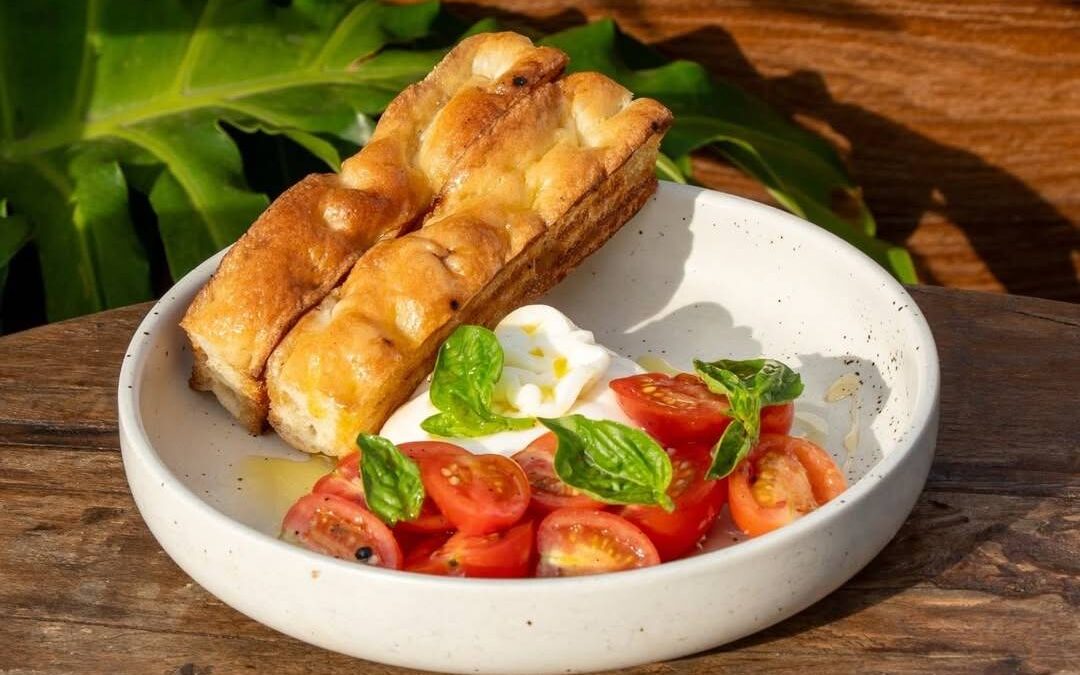
Farm to table is one of the most used phrases in restaurant marketing. It suggests a connection between land and kitchen that, in most cases, does not really exist — a weekly order from a wholesale supplier, a token kitchen garden, produce that changes hands three or four times before it reaches a plate.
At Mood by Ours, the supply chain is different. The restaurant is part of Ours Group, which owns and operates a working farm in Bedugul — a highland farming region in North Bali, roughly 1,500 metres above sea level. Over 75% of the produce served across Mood comes from that farm. It is harvested and delivered to Uluwatu daily. There is no middleman, no cold storage chain, and no gap between what was growing in the ground and what arrives in your bowl.
This is what farm to table actually looks like when it is built into the business model rather than used as a description.
Where Is Bedugul — and Why Does It Matter
Bedugul sits in the Tabanan Regency of North Bali, in a volcanic highland area around Lake Bratan at approximately 1,500 metres above sea level. The altitude brings consistently cooler temperatures, higher rainfall, and naturally fertile volcanic soil — conditions that make it one of the most productive agricultural regions in Indonesia.
Bedugul has been Bali’s primary farming region for generations. The area grows a wide range of vegetables, fruits, and herbs that cannot be cultivated in the lowland heat — leafy greens, root vegetables, brassicas, herbs, and more. The cooler climate means produce grows more slowly, with more concentration of flavour and nutrients than hothouse or lowland alternatives.
The distance from OURS Farm in Bedugul to the Mood kitchen in Uluwatu is roughly 80 kilometres. The produce covers that distance the same day it is harvested.
Most restaurants in South Bali — Uluwatu, Seminyak, Canggu — source their produce from wholesale markets in Denpasar, where it arrives from farms across Java and Bali, sitting in distribution chains that can span several days. By the time vegetables reach a kitchen, they have already lost a significant portion of their nutritional value and flavour.
The OURS Farm model removes that chain entirely for the majority of what is served at Mood.
OURS Farm: What Grows There
OURS Farm is not a symbolic kitchen garden. It is a working agricultural operation producing the volume required to supply a full-service café and market in Uluwatu daily. The farm grows seasonal vegetables, fruits, and herbs suited to the Bedugul climate — produce that arrives at the Mood kitchen at peak freshness because it has not spent time in storage or transit.
The farm operates on sustainable practices. No chemical pesticides. Growing methods that maintain soil health across seasons rather than depleting it for short-term yield. This matters not only for the quality of the produce but for the integrity of the land the farm depends on long term.
What is not grown on OURS Farm comes from trusted local farmers the Mood team works with directly — producers who follow the same standards the farm holds itself to. The supply chain stays local, stays short, and stays transparent.
From Bedugul to Your Plate in Uluwatu
Harvested daily
Produce is not harvested in bulk and stored for the week. It is picked at the right point of ripeness and delivered to the Uluwatu kitchen the same day. This is not a minor detail — it is the difference between a vegetable that has been sitting in a cold chain for five days and one that was in the ground the morning before it reached your plate.
Made in-house from scratch
The farm produce does not just become salads and sides. The Mood kitchen uses it as the base for a wide range of in-house preparations — pastas, sauces, juices, and pantry staples are all made on-site. Nothing comes in a jar or a packet if it can be made properly from the raw ingredients arriving from Bedugul. The Mood Market sells these house-made products alongside fresh produce, so the same quality is available to take back to your villa.
No seed oils — from farm to finish
One of the clearest expressions of the farm-to-table commitment at Mood is what happens to the produce once it reaches the kitchen. Most restaurants use canola, sunflower, or vegetable oil for cooking — cheap, industrial seed oils that oxidise under heat. Mood uses none of them.
Fried dishes use beef tallow. Stir-fries use grass-fed butter or olive oil. Salads use extra-virgin olive oil. Vegan dishes use coconut oil. All meats are flame-grilled with no added oils. The commitment to clean ingredients does not stop at sourcing — it carries through to every step of how the food is prepared.
Probiotic chicken, grass-fed beef, quality fish
The meats served at Mood are sourced with the same care as the produce. The chicken is locally sourced, organic, and probiotic-fed — raised in a way that supports the birds’ health and reduces the need for chemical intervention. The beef is grass-fed. Fish and prawns come from quality suppliers.
None of this is unusual in high-end restaurant dining. It is unusual in a casual farm-to-table café setting in Uluwatu. That gap is exactly what Mood was built to close.
Why This Supply Chain Shows Up on the Plate
Fresh produce tastes different. If you have eaten a tomato bought from a market three days after harvest versus one picked that morning, you know the difference without needing a nutritional argument to support it. The same applies to every vegetable, fruit, and herb that comes through the Mood kitchen.
But it is not only about flavour. Nutrients degrade after harvest — vitamins, antioxidants, and phytonutrients begin breaking down as soon as a plant is picked. The shorter the time between harvest and plate, the more of that nutritional value makes it into the meal. A daily delivery from a farm 80 kilometres away retains significantly more than produce that spent a week moving through a distribution chain.
The Mood Bowls are the clearest example of this on the menu. Each bowl is built around a specific health outcome — muscle recovery, brain health, gut health, nutrient density. Those outcomes depend on the ingredients being what they are supposed to be, grown properly and handled with care. The farm supply chain is what makes those claims credible, not just aspirational.
The Mood Market: The Same Source, for Your Kitchen
Alongside the café, Mood runs an organic grocery market in Uluwatu that stocks the same produce from OURS Farm and the same trusted local suppliers. Fresh seasonal vegetables, farm eggs, daily bread, house-made pastas and sauces, clean pantry staples, no-seed-oil products, supplements, and vitamins.
If you are staying in Uluwatu and want to cook for yourself, the market is where to shop. What you buy there came from the same farm, delivered the same day. It is also available on Gojek for delivery within the Uluwatu area.
What Real Farm to Table Looks Like
Farm to table in Bali usually means something vague. At Mood by Ours, it means a specific farm in a specific place — Bedugul, North Bali — that the Ours Group owns and operates, delivering daily to a kitchen in Uluwatu that cooks without seed oils, without added sugar, and without shortcuts in the supply chain.
It required a decision to build a farm rather than rely on a supplier. That decision shows up on every plate.
You can see the full result on the Mood by Ours menu — from the breakfast dishes made to order each morning to the Mood Bowls built around specific health outcomes at lunch and dinner. If you are looking for somewhere in Uluwatu where healthy food is taken seriously from the ground up, this is where that starts — literally.
Mood by Ours is on Jl. Labuansait No. 9, Pecatu, Uluwatu. Open daily 8am to 10pm. WhatsApp: +62 822-4762-0267.